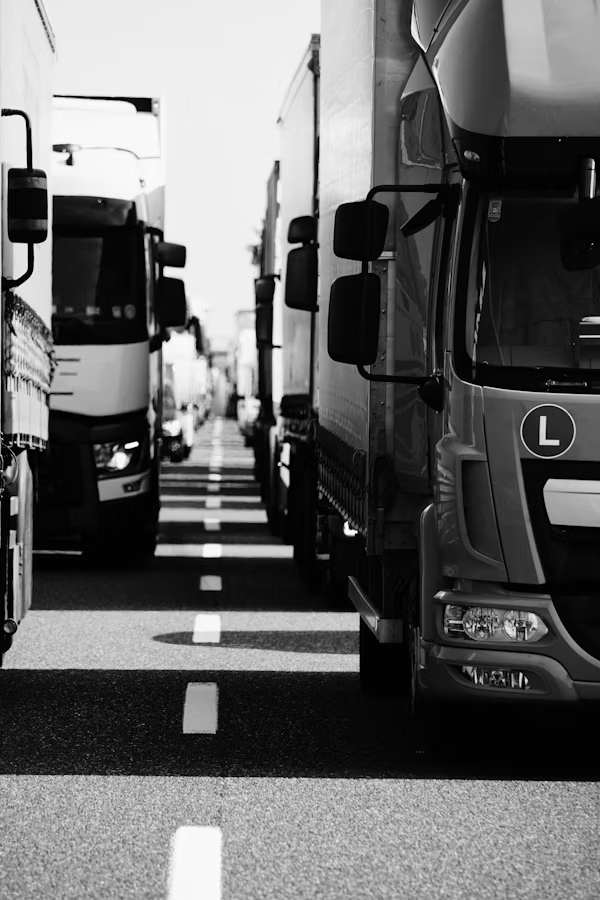
Small businesses are facing a silent struggle as transport costs climb, forcing them to make difficult choices.
28 March 2026
3 min read-- reading now
The ikan bakar stall owner used to get his fish from Kuala Selangor twice a week. Now it's once, sometimes a smaller batch if the supplier says diesel prices are up again. Every time the lorry pulls away, the owner can almost hear the fuel meter ticking down, a quiet, steady climb.
It isn't just him. Every small business that moves things around feels it. Ramli at the warung sees the cost of his cooking oil delivery rise. The man who delivers mineral water bottles to offices in Shah Alam. The lady selling homemade kuih from her Proton Saga, driving from kampung to kampung, still pays more for her ingredients to arrive.
For many small transport operators, the diesel price has jumped, sometimes upwards of 20% in a year. That’s a whole day’s profit for some, gone into a tank for a single delivery run. It feels like a hidden tax on simply trying to operate, pushing up the price of everything from a sack of rice to a carton of drinks. These are the lorries and vans that bring goods to every kedai runcit and hawker stall.
Ramli can't just raise his nasi lemak price by 50 sen. His regulars would notice immediately. They are watching their own wallets too, making their own calculations at home, feeling the ripple effect of those same transport costs. So Ramli absorbs what he can, hoping a bigger volume of sales might balance it out. But that's a gamble when everyone is tightening their belts, when every household budget is stretched thin.
The delivery riders, they calculate every route on their apps with a new kind of scrutiny. Is it worth the detour for that one extra order that adds another five kilometres? Sometimes, the answer is no. A parcel sits an extra day at the hub. A hot meal arrives a little later, or not at all if the distance doesn't make economic sense anymore.
It's not just the fuel for the car or motorbike. It is the gas for the stove, the electricity for the fridge, the plastic bags from the supplier who also pays more for their own transport. Everything has a little extra built into it now, a trickle-down effect that becomes a flood for those at the bottom of the chain. These are the costs that rarely make the headlines, but they hit the hardest.
The margin for error shrinks with every price hike. The space to breathe gets smaller. Many small businesses, the backbone of local communities, are operating on razor-thin profits. A sudden surge in fuel costs, especially for transport, can push them over the edge, forcing them to cut staff, reduce hours, or worse.
There is a quiet re-evaluation happening on every street corner. Every small business owner looking at their accounts, doing the sums late at night, long after their last customer has left. Trying to figure out how to keep the doors open when the cost of simply getting things from A to B keeps rising, relentlessly.
The smell of frying fish still drifts from the stall, warm and inviting. But the arithmetic behind it is a constant, quiet hum, a different kind of struggle. Every single day.
Pemilik gerai ikan bakar dahulu mengambil bekalan ikannya dari Kuala Selangor dua kali seminggu. Kini, hanya sekali seminggu, kadang-kadang dengan kuantiti yang lebih kecil jika pembekal memaklumkan harga diesel naik lagi. Setiap kali lori pembekal beredar, pemilik gerai itu seolah-olah dapat mendengar meter minyak bergerak, satu kenaikan yang senyap tetapi berterusan.
Bukan hanya dia. Setiap perniagaan kecil yang melibatkan pergerakan barang merasai kesannya. Ramli di warung melihat kos penghantaran minyak masak meningkat. Lelaki yang menghantar botol air mineral ke pejabat-pejabat di Shah Alam. Wanita yang menjual kuih buatan sendiri dari Proton Saganya, memandu dari kampung ke kampung, juga membayar lebih untuk bahan-bahan mentah yang dihantar kepadanya.
Bagi kebanyakan pengusaha pengangkutan kecil, harga diesel telah melonjak, kadang-kadang melebihi 20% dalam setahun. Jumlah itu bersamaan dengan keuntungan sehari bagi sesetengah pihak, yang habis begitu sahaja untuk mengisi tangki bagi satu perjalanan penghantaran. Ia terasa seperti cukai tersembunyi hanya untuk menjalankan perniagaan, menaikkan harga segala-galanya, dari seguni beras hingga sekarton minuman. Ini adalah lori dan van yang membawa barangan ke setiap kedai runcit dan gerai penjaja.
Ramli tidak boleh sewenang-wenangnya menaikkan harga nasi lemaknya sebanyak 50 sen. Pelanggan tetapnya akan perasan serta-merta. Mereka juga memerhatikan dompet sendiri, membuat pengiraan di rumah, merasai kesan rantaian kos pengangkutan yang sama. Jadi, Ramli menyerap kos yang mampu, berharap jumlah jualan yang lebih besar dapat mengimbanginya. Tetapi itu adalah pertaruhan apabila semua orang sedang berjimat cermat, apabila setiap bajet isi rumah menjadi ketat.
Penghantar makanan dan bungkusan, mereka mengira setiap laluan pada aplikasi mereka dengan teliti. Adakah berbaloi untuk mengambil lencongan bagi satu pesanan tambahan yang menambah lima kilometer lagi? Kadang-kadang, jawapannya adalah tidak. Sesuatu bungkusan akan tersimpan sehari lagi di pusat pengumpulan. Hidangan panas tiba sedikit lewat, atau tidak sampai langsung jika jaraknya tidak lagi masuk akal dari segi ekonomi.
Bukan hanya bahan api untuk kereta atau motosikal. Ia juga gas untuk dapur, elektrik untuk peti sejuk, beg plastik daripada pembekal yang turut membayar lebih untuk pengangkutan mereka sendiri. Segala-galanya kini mempunyai sedikit kos tambahan, satu kesan rantaian yang akhirnya menjadi beban besar bagi mereka di hujung rantaian. Ini adalah kos yang jarang menjadi tajuk utama berita, tetapi paling terasa kesannya.
Margin keuntungan semakin mengecil dengan setiap kenaikan harga. Ruang untuk bernafas semakin sempit. Banyak perniagaan kecil, yang menjadi tulang belakang komuniti setempat, beroperasi dengan margin keuntungan yang sangat tipis. Peningkatan mendadak dalam kos bahan api, terutamanya untuk pengangkutan, boleh menolak mereka ke ambang kerugian, memaksa mereka mengurangkan kakitangan, memendekkan waktu operasi, atau lebih teruk lagi.
Penilaian semula secara senyap sedang berlaku di setiap sudut jalan. Setiap pemilik perniagaan kecil meneliti akaun mereka, membuat pengiraan lewat malam, jauh selepas pelanggan terakhir beredar. Mencuba mencari jalan bagaimana untuk terus beroperasi apabila kos untuk menggerakkan barang dari satu tempat ke tempat lain terus meningkat, tanpa henti.
Bau ikan bakar masih harum dari gerai itu, memanggil dan mengundang. Namun, pengiraan di sebaliknya adalah satu desiran senyap yang berterusan, satu perjuangan yang berbeza. Setiap hari.